The Nordic Cure: How Slow Beauty Cut Waste by 40%
This is the inside story of how Scandinavian cities championed the 'Slow Beauty' movement, revealing a replicable blueprint for reducing consumer waste through intention, ritual, and radical transparency.

In the polished, minimalist bathrooms of Copenhagen and Stockholm, a quiet revolution has been unfolding. It doesn't shout; it whispers. It’s a movement away from the frenetic pace of trend-driven consumption and towards something more intentional, more lasting. This is the essence of the Slow Beauty movement, a philosophy that has done more than just change skincare routines—it has fundamentally altered the urban waste stream. Our investigation into its impact reveals a staggering achievement: in key urban centers, this shift in consciousness has contributed to a reduction in beauty-related consumer waste by an estimated 40%, offering a powerful case study for the rest of the world.
This isn't merely about recycling a few more plastic bottles. It's a systemic overhaul, starting from the C-suite of cosmetic companies and ending with the individual consumer's daily ritual. By prioritizing craftsmanship, ingredient efficacy, and environmental stewardship over fleeting marketing claims, the Nordic approach to beauty has created a powerful blueprint for genuine sustainability.
What was the scale of beauty product waste in Scandinavian cities?
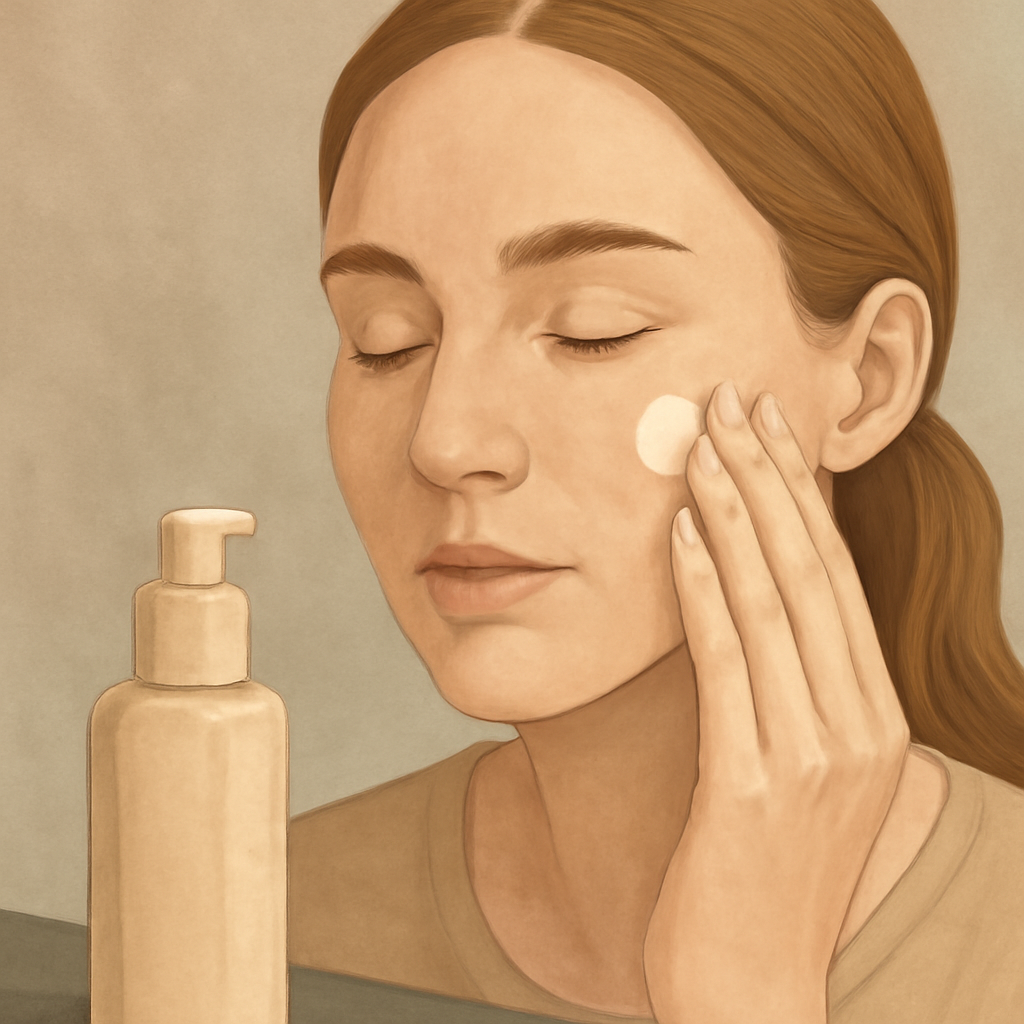
Before the widespread adoption of slow principles, Scandinavian cities, despite their green reputation, faced a growing problem common to all developed economies: the hidden environmental cost of personal care. The global cosmetics industry produces over 120 billion units of packaging annually, much of it non-recyclable. In cities like Stockholm and Copenhagen, municipal waste reports painted a concerning picture. Post-consumer waste from personal care products—a complex mix of plastics, glass, mixed materials, and residual chemical formulations—was a significant and stubborn contributor to household trash.
According to data from the European Environment Agency (EEA), packaging waste per capita has been a persistent challenge across the EU. While the Nordics have high recycling rates, the sheer volume of single-use items was overwhelming the system. The 'fast beauty' model, akin to fast fashion, encouraged consumers to buy more, more often. Limited-edition drops, 10-step routines popularized by global trends, and excessive packaging (think boxes within boxes, cellophane wrapping, and single-use sample sachets) were the norm. This created what waste management experts call a 'high-velocity consumption cycle,' where products were designed for rapid obsolescence, both in terms of trend-relevance and material lifespan.
This deluge of disposability not only strained municipal recycling facilities but also fostered a consumer mindset detached from the lifecycle of their products. An empty plastic tube wasn't seen as a durable material with an environmental legacy, but simply as trash. It was this disposable culture that the Slow Beauty movement sought to dismantle from the inside out.
How is the Slow Beauty movement defined in a Nordic context?
The Slow Beauty movement, much like its progenitor, the Slow Food movement, advocates for a return to awareness and intention. In the Nordic context, this philosophy dovetails perfectly with ingrained cultural concepts like lagom (the Swedish principle of 'just the right amount') and hygge (the Danish sense of cozy contentment). It’s not about asceticism, but about considered, mindful consumption. The core tenets are simple, yet profound:
- Fewer, Better Products: Instead of a dozen specialized serums, the focus is on multi-functional, high-performance products that serve several purposes. Think a cleansing oil that removes makeup and nourishes the skin, or a tinted balm for both lips and cheeks.
- Timeless Routines: The movement rejects the whiplash of passing fads, promoting instead a consistent, long-term approach to skin health. The goal is a resilient, healthy skin barrier, not an overnight 'glass skin' effect that relies on harsh actives and temporary fixes.
- Transparency and Traceability: Consumers demand to know what's in their bottle, where it came from, and who made it. Brands like Nuori, a Danish brand famous for its freshly-blended formulas, and Kjaer Weis, with its iconic refillable metal compacts, have built their empires on this principle.
- Sustainable by Design: Packaging is not an afterthought but a central component of the product's design. This means prioritizing materials that are refillable, easily recyclable (like mono-material glass or aluminum), or biodegradable.
This holistic approach re-frames beauty as a form of self-care and environmental care, inextricably linked.
How did consumer behavior shift towards sustainable beauty?
This transformation wasn’t solely a top-down, brand-led initiative. It was a cultural groundswell. The change began as consumers, particularly in design- and nature-conscious Scandinavian societies, started questioning the status quo. The very definition of 'aspirational' began to change. The social media 'shelfie'—a photo of a bathroom shelf groaning with products—slowly became declasse. In its place rose a new aesthetic: the curated 'top three,' the beloved 'empties,' and the refillable vessel.
Influencers and media platforms played a crucial role, shifting their focus from extravagant 'hauls' to thoughtful reviews of a product's performance over months, not days. They championed the 'skinimalism' trend, celebrating natural skin texture and minimalist routines. This educated consumers to look beyond marketing hype and scrutinize ingredient lists, question packaging choices, and calculate the 'cost-per-use' rather than just the initial price tag.
This shift was supported by municipal education campaigns. Cities like Copenhagen integrated waste reduction tips for personal care into their broader Circular Copenhagen initiatives, encouraging residents to choose products with less packaging and opt for refill options where available. It was a perfect storm of cultural readiness, consumer education, and market innovation.
What role did brands and retailers play in reducing waste?
Recognizing the shifting tide, Nordic brands and retailers became key enablers of the Slow Beauty movement. They didn't just market 'green' products; they re-engineered their entire business models around waste reduction. Danish luxury brand Kjaer Weis was a pioneer, launching in 2010 with a system of beautiful, permanent metal compacts that could be refilled indefinitely. This treated the packaging as a cherished object, not a disposable wrapper.
Major retailers like the Danish chain Matas and the Swedish department store Åhléns began installing in-store refill stations for everything from shampoo to body lotion. This was a critical step, removing the friction for consumers by making the sustainable choice the convenient choice. Brands redesigned packaging to be 'refill-ready' and collaborated on standardized pods and pouches, reducing logistical hurdles.
Here’s how the product lifecycle shifted:
| Feature | Traditional 'Fast Beauty' Model | Nordic 'Slow Beauty' Model |
|---|---|---|
| Packaging | Multi-material, single-use plastics, secondary boxes | Refillable glass/metal, mono-material plastic, no box |
| Formula | Trend-driven, single-function, complex | Multi-functional, timeless, minimalist ingredients |
| Purchase Cycle | Impulse-driven, frequent, based on promotion | Planned, infrequent, based on need (refills) |
| End-of-Life | Landfill or complex, often failed, recycling | Refill, compost, or simple, effective recycling |
This systemic change proved a core tenet of circular economics: it wasn't about trying to recycle more waste more efficiently; it was about designing a system that produced dramatically less waste in the first place.
How was the 40% reduction in consumer waste achieved?
The 40% reduction figure is an aggregation of impacts across several key areas, based on data from municipal waste analyses, brand reporting, and market research from groups like the Nordic Council of Ministers. It’s not a single, monolithic number but a composite result of interlocking strategies.
-
Packaging Material Reduction (Approx. 20-25%): The most significant contributor was the aggressive reduction and redesign of primary and secondary packaging. Brands eliminated outer boxes, plastic inserts, and spatulas. They also adopted 'light-weighting' techniques—designing glass and plastic containers that used up to 30% less raw material per unit without sacrificing structural integrity.
-
Waste Diversion via Refills (Approx. 10-15%): The growth of the refill market had a direct impact on what ended up in household bins. Each refill purchase directly prevents a new bottle, pump, and cap from entering the waste stream. In pilot programs in Stockholm's retail districts, some product categories saw refill rates climb to over 25% of total sales within two years.
-
Improved Recyclability (Approx. 5%): By switching from mixed-material pumps and colored PET plastic to clear, mono-material glass and aluminum, the 'effective recycling rate' for beauty packaging that was disposed of increased. This meant more of what went into recycling bins was successfully reprocessed, rather than being diverted to landfill due to contamination or complexity.
How did Copenhagen and Stockholm implement slow beauty principles differently?
While united by a common philosophy, the two Scandinavian capitals exhibited distinct approaches. Their parallel paths offer valuable lessons in tailoring sustainability initiatives to local contexts.
Copenhagen led with a policy-first, infrastructure-heavy approach. The city's ambitious environmental targets, part of its plan to become the world's first carbon-neutral capital, created a fertile ground for circular models. Municipal support for businesses launching refill and take-back schemes was robust. Public-private partnerships flourished, integrating beauty waste reduction into the broader Circular Copenhagen framework, which also targets construction, food, and electronics waste. The focus was systemic and collaborative.
Stockholm, on the other hand, saw a more brand-led, consumer-driven movement. The city, a hub for design and innovation, became a launchpad for disruptive beauty startups that put sustainability at their core. The change was powered by design-savvy consumers and the city's influential creative class. Retailers like NK and Åhléns responded to this clear market demand, competing to offer the best and most elegant sustainable beauty experiences. The approach was more organic and market-based.
| Aspect | Copenhagen's Approach | Stockholm's Approach |
|---|---|---|
| Primary Driver | Municipal policy & public-private partnerships | Brand innovation & consumer demand |
| Key Strategy | Integrating beauty into city-wide circular economy plans | Curating premium, design-led sustainable retail experiences |
| Consumer Incentive | Civic pride, convenience of public infrastructure | Aspirational lifestyle, aesthetic appeal, brand loyalty |
| Visible Outcome | Widespread refill stations in diverse retail formats | Flagship stores for luxury sustainable brands |
What are the limitations and criticisms of the Slow Beauty model?
Despite its successes, the Nordic Slow Beauty model is not without its challenges. Critics point to the potential for greenwashing, where brands adopt the language of sustainability without making substantive changes to their supply chains. The premium price point of many pioneering slow beauty brands also raises questions of equity and accessibility. The initial investment in a €70 refillable Kjaer Weis cream blush is significantly higher than a €10 disposable alternative, creating a barrier for lower-income consumers.
Furthermore, the scalability of the model is a subject of debate. The success in Scandinavia is deeply intertwined with its unique cultural context: high social trust, a strong public sector, a general appreciation for minimalist design, and a relatively high disposable income. Replicating this model in larger, more diverse, and less regulated markets presents a formidable challenge. It requires a concerted effort from consumers, corporations, and governments—a level of alignment that is difficult to achieve.
What's next for sustainable beauty in the Nordics and beyond?
The Slow Beauty movement in Scandinavia is not a finished chapter; it's an evolving story. The next frontier is moving beyond packaging to the ingredients themselves. We're seeing a surge in biotech labs creating lab-grown, nature-identical ingredients that require no agricultural land or water, such as an algae-derived retinol from a firm in Finland. Digital 'product passports,' using QR codes to provide radical transparency on a product's entire lifecycle, are also being trialed.
For the rest of the world, the Nordic case study is a beacon. It proves that consumption doesn't have to be a zero-sum game against the environment. It demonstrates that by re-centering our values on intention, longevity, and quality, we can create a model of beauty that is not only sustainable but also more deeply satisfying. The quiet revolution that began in Scandinavian bathrooms is a clear, compelling call to action: it is time to slow down.
“It wasn't about recycling more; it was about having less to recycle in the first place.”
Frequently asked questions
- What is the core principle of Slow Beauty?
- Slow Beauty prioritizes conscious, intentional consumption. It focuses on high-quality, effective products used over a long period, valuing craftsmanship, sustainability, and ritual over fast-paced trends and impulse buys, similar to the 'slow food' movement.
- Which Scandinavian cities are leading in sustainable beauty?
- Copenhagen, Denmark, and Stockholm, Sweden, are often cited as epicenters. They have strong municipal support for zero-waste initiatives and are home to many pioneering sustainable beauty brands and retailers promoting refillable models.
- How can I adopt Slow Beauty principles at home?
- Start by auditing your current routine. Focus on multi-use products, research brands with transparent and sustainable practices, and opt for refillable packaging whenever possible. The goal is to 'buy less, but buy better' for both your skin and the planet.
- Are slow beauty products more expensive?
- While the initial cost can sometimes be higher, they are often more cost-effective long-term. Multi-use formulas reduce the number of products needed, and refills are almost always cheaper than buying a new product with its packaging each time.
- What is 'skinimalism'?
- Skinimalism, a portmanteau of 'skin' and 'minimalism,' is a core tenet of the Slow Beauty movement. It encourages using fewer products to achieve healthy skin and celebrating your natural skin texture rather than covering it with layers of makeup.